
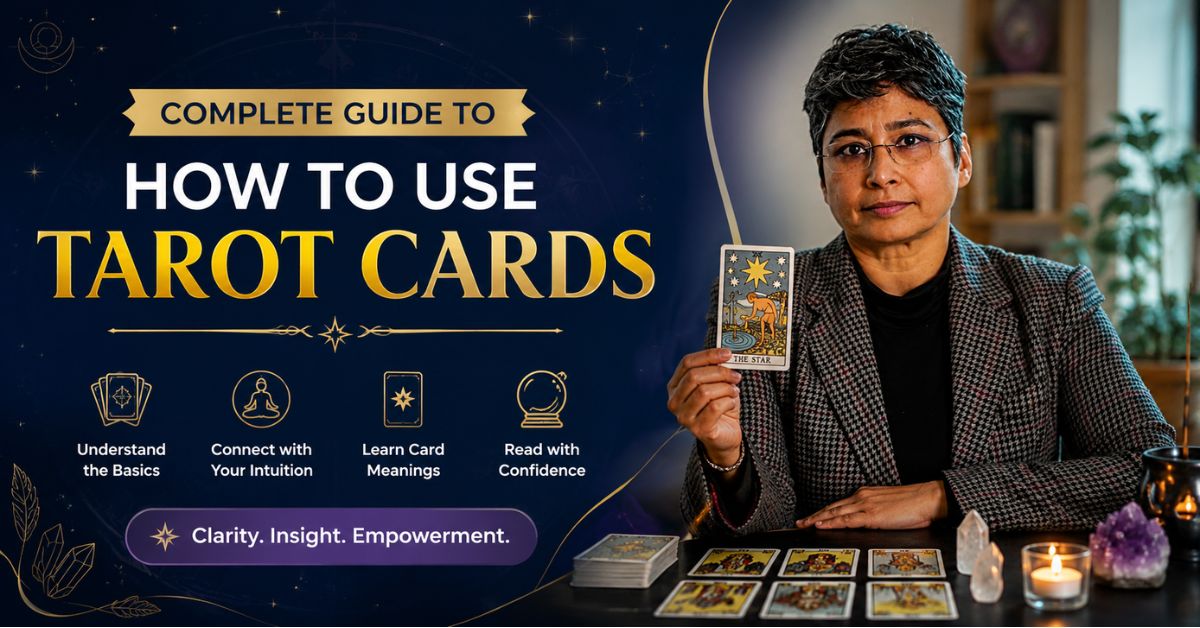
You have probably seen someone lay out a spread of illustrated cards on a table and wonder what it all means. Maybe a friend swears by her morning tarot card of the day, or you have come across tarot on social media and felt a quiet pull of curiosity. If you have been thinking about starting but feel overwhelmed by the 78 cards, the symbolism, and the sheer volume of information out there, this guide is for you.
Learning how to use tarot cards does not require psychic ability, years of study, or any prior spiritual experience. What it does require is a willingness to be honest with yourself and a commitment to showing up consistently. This guide will walk you through everything you need to begin a meaningful daily tarot practice from scratch.
What Tarot Actually Is and What It Is Not
Before we get into the practical steps, it helps to clear up a common misconception. Tarot is not a fortune-telling tool that predicts a fixed future. It is, at its core, a mirror. The 78 cards in a traditional tarot deck represent the full spectrum of human experience, from moments of triumph and love to fear, confusion, and transformation.
When you draw a card, you are not unlocking a pre-written fate. You are inviting a visual and symbolic prompt that helps you reflect on your current situation, examine your feelings, and explore your options with more clarity. This is why tarot for self-reflection has become one of the most popular tools in the modern wellness and mindfulness space.
Think of each card less as a message from the universe and more as a thoughtful question from a wise friend. The insight, ultimately, comes from you.
What You Need to Get Started
The barrier to entry for tarot is genuinely low. Here is what you need:
- A tarot deck: The Rider-Waite-Smith deck is widely recommended for beginners because the imagery is rich, intuitive, and the foundation for most modern decks. However, choose a deck whose artwork genuinely speaks to you.
- A journal: Tarot journaling is one of the most transformative habits you can build. A simple notebook works perfectly.
- A quiet space: A few minutes each morning or evening are enough to begin.
- An open mind: You do not need to believe in anything supernatural. You simply need to be willing to sit with a question and listen to your own thoughts.
That is genuinely all. Many people put off starting because they feel they need to memorise all 78 card meanings first. You do not. The most powerful tarot readings often come from intuitive observation of the card's imagery, not memorised definitions.
Understanding the Structure of a Tarot Deck
A standard tarot deck has 78 cards divided into two main groups.
The Major Arcana
These are 22 cards numbered 0 through 21, beginning with The Fool and ending with The World. They represent major life themes, turning points, and archetypal energies. When a Major Arcana card appears in a daily draw, it often signals that something significant is at play, an important transition, a deep lesson, or a major shift in perspective.
If you want to explore the Major Arcana in greater depth, visit the Mini Astro Tarot blog for more beginner-friendly tarot guides.
The Minor Arcana
The remaining 56 cards are divided into four suits: Wands, Cups, Swords, and Pentacles. Each suit governs a different area of life. Wands relate to passion, creativity, and ambition. Cups cover emotions, relationships, and intuition. Swords deal with thought, conflict, and communication. Pentacles address the material world, finances, and practical matters.
Each suit runs from Ace to Ten, followed by four Court Cards: Page, Knight, Queen, and King. As a beginner, you do not need to memorise all of this immediately. Familiarity comes naturally with daily use.
How to Use Tarot Cards: The Daily One-Card Pull
The single most effective way to build a daily tarot practice is through the one-card pull. It is simple, takes only a few minutes, and creates a powerful habit loop over time.
Step 1: Set Your Intention
Before you draw, take a slow breath and get present. You do not need an elaborate ritual. Simply hold your deck, close your eyes for a moment, and ask a question. Good questions for a daily pull include:
- What energy should I bring into today?
- What do I need to be aware of right now?
- What is the most important thing for me to focus on today?
- What lesson is this day offering me?
Avoid yes-or-no questions for your daily pull. Open-ended questions yield far richer insights and support genuine tarot for self-reflection.
Step 2: Shuffle and Draw
Shuffle the cards in whatever way feels natural. Some people shuffle until a card falls out. Others split the deck and draw from the top. There is no wrong method. What matters is that the process feels intentional rather than mechanical.
Draw one card and place it face-up in front of you.
Step 3: Observe Before You Interpret
This is the step most beginners skip, and it is the most important. Before you reach for a guidebook or search for a meaning online, simply look at the card. Notice what your eye goes to first. What colours dominate the image? Is the figure in the card moving forward or standing still? Does the scene feel calm or chaotic? What is your immediate emotional response?
Intuitive tarot reading begins with this raw, unfiltered observation. Your instinctive response to the card is often the most accurate reading you will ever receive.
Step 4: Connect It to Your Day
Now ask yourself: how does this card relate to what is happening in my life right now? You are not looking for a literal interpretation. A card depicting a thunderstorm does not mean you will face a crisis today. It might mean there is tension you have been avoiding, a creative breakthrough approaching, or an internal conflict that needs attention.
The practice of connecting symbolic imagery to lived experience is the core of how to use tarot cards effectively.
Step 5: Journal the Insight
Write down the card you drew, your initial observations, and the connection you made to your current situation. This step transforms tarot from a passive exercise into an active tool for growth. Over weeks and months, your journal becomes a record of patterns, personal symbols, and developing self-knowledge.
Tarot journaling is where the real magic happens. You will begin to notice that certain cards reappear during specific emotional states, that particular suits show up during certain life phases, and that your understanding of each card deepens through personal experience rather than memorisation.
Tarot and Daily Decision-Making: Practical Examples
One of the most common questions beginners have is this: how do I actually use a tarot card to help me make a real decision? Here are three practical scenarios.
Career Decisions
Suppose you are considering whether to leave your current job for a new opportunity. You draw the Two of Swords: a blindfolded figure holding two crossed swords, unable to move. Rather than reading this as a definitive answer, you sit with the image. The card reflects indecision, avoidance, and the discomfort of not yet having enough information to choose. Today's action becomes clear: gather more facts before deciding. Have the conversation you have been putting off. Research the new role more thoroughly.
For deeper guidance on career decisions through a personalised lens, Mini Govil's career astrology consultations combine Vedic chart analysis with intuitive tarot insights for a complete picture.
Relationship Clarity
You are unsettled about a relationship and draw the Six of Cups, a card associated with nostalgia, innocence, and revisiting the past. This might prompt you to reflect on whether you are seeing this person clearly or through the soft lens of memory and wishful thinking. The card does not tell you what to do. It invites you to examine your perception.
Navigating Emotional Overwhelm
On a day when everything feels heavy and unclear, you draw The Star, a card of hope, renewal, and quiet trust. Even on a difficult morning, this card can act as a gentle reminder that calm follows chaos, and that taking care of yourself today is the wisest action you can take.
Tarot Mindfulness: Using Cards as a Meditation Anchor
One of the most underused applications of tarot is as a tool for tarot mindfulness. Instead of reading the card intellectually, you use it as a visual anchor for a short meditation or breathing practice.
Draw your card of the day, then set a timer for five minutes. Sit quietly with the card in front of you. Let your eyes rest softly on the image. Notice what feelings arise. Notice where you feel tension or ease in your body. Allow the card to serve as a focus point, the same way a candle flame or a mantra might in traditional meditation.
This practice builds a deeply personal relationship with each card that no guidebook can replicate. Over time, cards begin to carry personal meaning shaped entirely by your own inner life.
How to Build a Consistent Daily Tarot Practice
Like any habit, consistency is the key to results. Here is how to make your daily tarot practice stick.
- Attach it to an existing habit: Pull your card of the day immediately after making your morning coffee or before you check your phone. Habit stacking makes new practices far easier to maintain.
- Keep your deck and journal visible: If they are out on your desk or bedside table, you are far more likely to use them.
- Release the pressure to interpret perfectly: Some days a card will feel completely irrelevant. That is fine. Sit with it anyway. Understanding often comes later in the day when an event suddenly makes the card's message obvious.
- Track your cards weekly: At the end of each week, review your journal entries. Look for patterns. Which suits appeared most frequently? Did the same card appear multiple times? These repetitions carry meaning.
- Trust your instincts over textbook meanings: Your intuitive response to a card is always more valuable than a memorised definition. Intuitive tarot reading develops through practice, not study alone.
Going Deeper: Three-Card Spreads for Bigger Decisions
Once you feel comfortable with the daily one-card pull, you can expand your practice with a simple three-card spread for moments that require more reflection.
The most versatile three-card spread uses the positions: Past, Present, and Future. Draw three cards and lay them left to right. The first card represents the background or context of your situation. The second reflects where you are right now. The third suggests the most likely direction if you continue on your current path.
You can also adapt this structure to: Situation, Action, Outcome. Or: What to embrace, What to release, What to focus on. The positions give your reading structure without constraining your intuition.
If you are navigating a major crossroads and want guidance that goes beyond a single spread, Mini Govil's Tarot Guidance consultations offer a full intuitive reading combined with the depth of a Vedic perspective.
Common Beginner Mistakes to Avoid
Drawing Multiple Cards Until You Get the Answer You Want
This is the single most common beginner habit, and it undermines the entire practice. Draw one card, sit with it honestly, and trust that it is showing you what you need, not necessarily what you want.
Treating Every Card as a Warning
Cards like The Tower, Death, or The Devil can trigger anxiety in beginners. These cards are not omens of disaster. The Tower represents sudden change and the clearing of what no longer serves you. Death signifies transformation and endings that make space for new beginnings. Context, surrounding cards, and personal intuition are everything.
Skipping the Journaling Step
The reading happens in the moment. The growth happens in the journal. Tarot journaling is what transforms a daily ritual into a genuine path of self-knowledge.
Where Tarot Fits Within a Broader Spiritual Practice
Tarot works beautifully alongside other reflective practices. Many practitioners use it alongside astrology, meditation, breathwork, or Vedic wisdom traditions. Understanding your birth chart, for instance, can provide powerful context for recurring tarot themes.
If you are curious about how your astrological blueprint shapes your emotional patterns, personality, and life path, the article on what your Moon sign reveals about your emotional world is a natural companion to a developing tarot practice. Similarly, understanding the difference between Vedic and Western astrology can deepen how you contextualise the messages you receive through tarot, which is explored in detail in this comparison of Vedic vs Western astrology.
A Sample Daily Tarot Routine for Beginners
Here is a simple framework to begin with from tomorrow morning:
- Morning, 5 minutes: Shuffle your deck, ask your daily question, draw one card, and spend two to three minutes observing the image before writing a brief journal entry.
- Evening, 5 minutes: Return to your journal. Review the card you drew in the morning. Note any moments during the day where the card's energy showed up. Write one sentence about the lesson or theme the card offered.
- Weekly, 15 minutes: Review the week's entries. Note which suits dominated, which cards appeared more than once, and whether any themes emerge across the week.
This three-step rhythm builds a sustainable daily tarot practice that deepens naturally over time.
Final Thoughts: Tarot as a Tool for Self-Knowing
Learning how to use tarot cards is ultimately a practice in learning how to listen to yourself. The cards do not have the answers. You do. What they offer is a structured, symbolic language through which your own inner wisdom can surface more easily.
Begin simply. Draw one card each morning. Write down what you notice. Return to it in the evening. Repeat tomorrow. Over weeks and months, you will find that the practice has quietly built something remarkable: a deeper, more honest relationship with your own mind, your patterns, and the direction you genuinely want your life to take.
At any point you feel called to go deeper than self-guided practice allows, a personalised tarot reading with an experienced reader can offer the kind of specific, grounded clarity that daily practice builds toward. You can explore personalised tarot and astrology sessions with Mini Govil for one-on-one guidance tailored entirely to your chart and current life situation.
About the Author
Mini Govil is a Vedic astrologer, tarot reader, and face reading expert based in Gurugram, India. With over 10 years of experience and more than 5,000 clients guided across India and internationally, Mini offers personalised consultations in Hindi and English. Explore her work at www.miniastrotarot.com.